01
Support skin appearance
Red-light routines are commonly chosen to support collagen activity and a smoother, more radiant-looking complexion.
Learn more
Why red light therapy
Red and near-infrared light are used in at-home routines for skin appearance, exercise recovery and focused self-care.
01
Red-light routines are commonly chosen to support collagen activity and a smoother, more radiant-looking complexion.
Learn more02
Near-infrared formats are often used after exercise as part of a consistent muscle-recovery and everyday-mobility routine.
Learn more03
Wearable devices make regular, hands-free light sessions easier to build into a focused scalp-care routine.
Learn more04
Quiet, at-home formats turn a short light session into a practical ritual that can fit around work, rest or training.
Learn moreCommonly selected for surface-level skin and scalp routines.
Often chosen for broader, recovery-focused sessions.
Benefits and experiences vary. Follow the product instructions and seek professional advice if you have a medical concern.
Choose your focus
Focused facial care to flexible full-body routines, explore devices selected for different spaces, priorities and ways of living.
 Facial care
A focused, hands-free light ritual designed for at-home facial care.
 Full body
A broader light field for recovery-focused routines and larger treatment areas.
 Targeted care
Compact red and near-infrared light for a flexible, focused daily session.
 Hair routine
A wearable format created to make consistent scalp-care sessions easier.
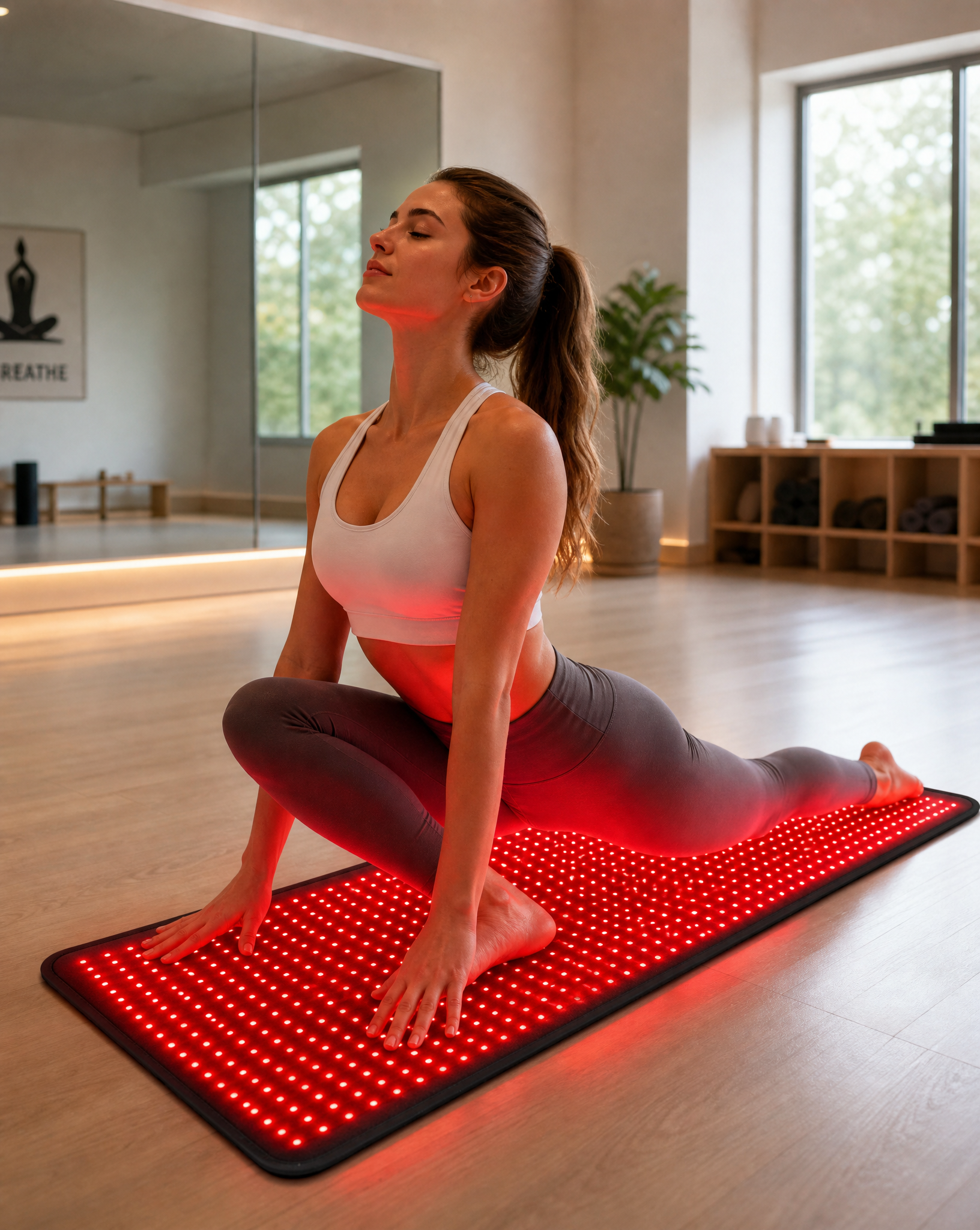
Designed around real life
There is no single way to use light therapy. Choose a focused or larger-format device and make it part of the way you work, unwind or recover, without restructuring your day.
Independent research
Explore selected independent research examining how different wavelengths and treatment protocols have been used.
A controlled study compared broad-area red and red-to-near-infrared protocols with a control group.
Participants receiving light experienced improvements in complexion and skin feeling, while measurements indicated reduced roughness and increased collagen density.
611–650 nm or 570–850 nm · 30 sessions · 136 volunteers · controlled study
Read the researchA home-use mask combining 630 nm LED and 850 nm infrared light was compared with a sham device.
The study reported differences in crow’s-feet grading at later assessments and described the treatment protocol as generally well tolerated.
630 nm + 850 nm · 9 minutes, 5 times weekly for 12 weeks · 60 enrolled · double-blind sham-controlled study
Read the researchResearchers tested a mixed-wavelength protocol before a sprint field test in high-level rugby players.
Participants experienced changes in sprint performance, fatigue measures, blood-lactate response and perceived fatigue compared with placebo.
640 nm, 875 nm + 905 nm · pre-exercise protocol · 12 athletes · randomized crossover placebo-controlled study
Read the researchGood to know
Practical guidance to help you choose and use your device with confidence.
These devices use specific wavelengths of visible red and near-infrared light. Different formats are designed for facial, scalp, targeted or broader full-body use. Always follow the instructions supplied with your device.
Start with the area you want to focus on and where the device will fit into your routine. Masks and caps offer hands-free targeted sessions, lamps are easy to reposition, and larger systems cover more of the body at once.
Session length and frequency vary by device. Check the product page and manual for product-specific guidance, begin gradually, and use the supplied eye protection whenever instructed.
Experiences vary by person, product and consistency of use, so results cannot be guaranteed. Treat light therapy as a regular routine and assess progress over time rather than after a single session.
Review the device warnings before use. If you are pregnant, have a light-sensitive condition, take photosensitising medication or have another medical concern, seek advice from a qualified healthcare professional first.